Kamasutra Sex Positions — Part 1 (51–70)
Twenty positions from Vatsyayana's classical Sanskrit text — the book India wrote, the world borrowed, and most people cite without having read.
What the Kamasutra Actually Says
Vatsyayana wrote the Kama Sutra in Sanskrit somewhere between the 2nd and 4th century CE, and roughly four-fifths of it has nothing to do with positions. The text covers courtship, marriage, friendship, household management and the conduct of a well-lived life. Its radical claim — radical then and arguably still — is that kama, pleasure, belongs alongside duty and prosperity as a legitimate aim of human life.
What distinguishes the sexual chapters is their attention to her signals. Again and again, Vatsyayana describes a woman's movements — hips raised, a leg wrapped, a foot placed on the shoulder — as instructions that should direct what happens next. Modern sexology reaches the same conclusion about responsiveness roughly eighteen centuries later.
The positions below are grouped in the original among the uttana-bandha (supine postures) and their standing and seated counterparts. Three are postures Vatsyayana names directly; the rest come from the commentarial tradition that accumulated around the text over the centuries that followed.
On Flexibility
A few entries — The Lotus-Like Position, Double Crab, Shoulder Stand — assume yoga-level flexibility or real upper-body strength. Build up gradually, never force a joint (particularly the knees in lotus), and skip anything that doesn't suit your bodies. A classical catalogue is a menu, not a syllabus.
The Twenty Positions

The Kamasutra opens its catalogue of uttana-bandha (supine positions) with this one. She lies on her back and raises her hips; he kneels or leans between her parted legs, supporting her lower back with his hands. Sanskrit commentators note that the raised-hip angle is the whole innovation here — it shortens the effective distance and changes the contact pattern substantially compared with lying flat. Her hip position is the signal that guides pace, which is characteristic of Vatsyayana's approach throughout: the text repeatedly treats her responses as instructions rather than reactions.
✨ Divine moment: Her raised hips set the angle, not you.
🌙 Pure nirvana: Let her control the rise and fall.

He lies fully against her in a press-up arrangement; she responds by wrapping her legs around his back. The wrap is the defining feature and the text treats it as communicative — a signal of engagement rather than a mechanical requirement. Complete body contact from shoulder to hip produces warmth and pressure across the entire torso. Vatsyayana notes the angle can be adjusted so contact reaches the clitoral area, which anticipates by many centuries what modern sexology calls the coital alignment technique.
✨ Divine moment: Her legs tightening is the feedback.
🌙 Pure nirvana: Adjust the angle until she confirms it.

He kneels; she sits astride his lap and leans back until her shoulders approach the surface, holding his shoulders or forearms for balance while he supports her hips. The backward lean is what distinguishes it — it opens the angle considerably while keeping the seated contact. It demands some core engagement from her, so it works better in intervals than continuously. The fish metaphor is Vatsyayana's, describing the arching movement the position naturally produces.
✨ Divine moment: The backward lean opens everything.
🌙 Pure nirvana: Support her fully so she can relax into it.



She lies back and lifts her torso so her weight rests on her shoulders while he holds her waist and remains upright. It's essentially a supported inversion, and it's demanding — best held briefly rather than sustained, with a cushion beneath her shoulders. The elevation produces a distinctly different angle from any flat position. As with all inverted arrangements, come out of it slowly rather than suddenly.
✨ Divine moment: Elevation changes the angle completely.
🌙 Pure nirvana: Brief holds, then something restful.

One of the Kamasutra's named classical postures: she lies back and parts her legs as wide as is comfortable, giving him room to move his torso freely. The Sanskrit name refers to the opening of the legs rather than any tiredness. The width is the mechanism — it gives him latitude to shift angle mid-encounter without repositioning, which is why the text recommends it for sustained sessions rather than brief ones.
✨ Divine moment: Width gives you room to vary the angle.
🌙 Pure nirvana: Change angle without ever repositioning.


She rests one foot on his shoulder while the other leg stays extended; he holds the raised leg and adjusts to that side. Vatsyayana frames the raised leg explicitly as her communication — an indication of preference rather than a posture he arranges. The asymmetry opens the angle on one side only, producing a sensation quite unlike symmetric positions, and raising the second leg escalates it further when she chooses.
✨ Divine moment: The raised leg is her instruction.
🌙 Pure nirvana: She decides whether the second leg follows.



She sits at the edge of a raised surface — a bed edge or table — with only her hips supported, legs and back free; he kneels or stands to meet her. The furniture does the work here, setting a height that no floor position can replicate. It's among the more practical entries in the catalogue precisely because it requires nothing but a surface of the right height, and she can wrap her legs around his back to control depth.
✨ Divine moment: The right surface height changes everything.
🌙 Pure nirvana: Her legs around your back set the depth.


He lifts and supports her weight while she wraps around him, controlling her own rise and fall by holding his shoulders. The text is clear that control transfers to her once she is lifted — his role is to be a stable base. It demands real strength and is best near a wall for support. The vertical movement produces a rhythm quite unlike any horizontal position, which is the reason it earns a separate entry.
✨ Divine moment: Once she's lifted, she sets the rhythm.
🌙 Pure nirvana: A wall nearby doubles how long it lasts.

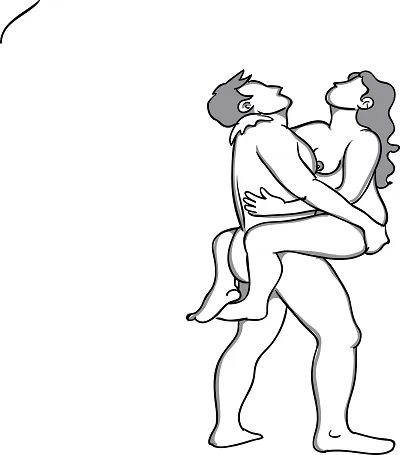
The wall-braced standing position: he lifts her and moves to a wall or pillar, which takes the weight that his arms otherwise would. Vatsyayana frames it as arising from urgency rather than planning. The text specifically mentions the shower as a setting, and there's practical sense in it — though a non-slip surface matters more there than anywhere else in this catalogue. She braces her shoulders against the wall and holds his shoulders.
✨ Divine moment: The wall does the work your arms can't.
🌙 Pure nirvana: Under a shower — carefully.



She stands facing a wall with hands braced against it, one leg slightly raised and held by him; he enters from behind. The braced hands are what make it stable — without the wall this arrangement is difficult to sustain. The text pairs it with an embrace from behind as the natural lead-in, and notes his free hand can reach around for simultaneous stimulation, which is the detail that elevates it from a simple standing position.
✨ Divine moment: Braced hands make it sustainable.
🌙 Pure nirvana: The free hand reaching around.



She lies flat with hands folded behind her head as a rest and knees drawn up; he kneels and holds her knees, creating a close fit that doesn't shift. The folded-hands detail is small but genuinely comfortable — it supports her neck through what can otherwise be a strained position. Drawing the knees up shortens the angle and produces the snug fit the text describes, making it stable enough for extended sessions.
✨ Divine moment: Hands behind her head — small detail, big comfort.
🌙 Pure nirvana: The fit holds without either of you working.


An evolution of the basic supine position: she draws her knees toward her chest and lifts her hips clear of the surface. Vatsyayana treats this as something that emerges naturally from arousal rather than a position to be arranged — her body moving into it is itself the signal. The lifted hips plus drawn knees produce contact that reaches the clitoral area as well, which the text notes explicitly.
✨ Divine moment: The position arrives on its own.
🌙 Pure nirvana: Her hips lifting is the whole signal.



The simplest entry in this section: she lies flat, he lies fully against her, complete body contact throughout. The text is direct that simplicity is the point — it lists this alongside far more elaborate arrangements precisely to make clear that complexity isn't a requirement. Her legs circling his calves is described as the natural response, and the full-length contact produces warmth that more athletic positions sacrifice.
✨ Divine moment: Simplicity earns its place in the catalogue.
🌙 Pure nirvana: Her legs circling your calves.


Both partners support themselves on their hands facing each other, her legs resting on his shoulders — a genuinely demanding arrangement requiring real strength and endurance from both. The text presents it as experimentation rather than a staple, and that's the right framing. Both can move toward each other rhythmically, and the face-to-face aspect is the appeal. Attempt briefly; there is no obligation to attempt it at all.
✨ Divine moment: Both of you facing, both of you working.
🌙 Pure nirvana: Brief experiment, then something kinder.



She folds her legs into the lotus arrangement — the same padmasana used in yoga and meditation — and lifts her hips slightly; he presses her folded legs gently toward her chest. The overlap with yogic practice is not incidental: the Kamasutra emerged from the same intellectual tradition, and several positions assume familiarity with those postures. Genuine flexibility is required, and forcing the lotus fold risks knee strain, so it's worth building up to over time rather than attempting cold.
✨ Divine moment: The same fold as meditation, differently applied.
🌙 Pure nirvana: Build to it — never force the knees.

She lies back and folds her legs; he kneels, holding her knees together for grip and position. The name comes from the geometric shapes the two bodies form — a characteristically Sanskrit way of describing arrangement. Holding the knees together rather than apart narrows the angle considerably. The text recommends it when both partners want something quick, since it requires no elaborate setup and reaches deep contact immediately.
✨ Divine moment: Knees held together narrows everything.
🌙 Pure nirvana: No setup needed — that's the appeal.
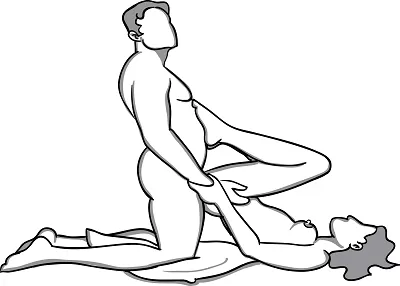
Named for Shachi, consort of Indra, king of the gods — the naming convention signals a position of some status in the catalogue. She lies back and rests her legs against his chest while he kneels upright and draws her hips toward him. It requires reasonable flexibility from her and produces one of the deepest contact angles in this section, which is precisely why depth should be found gradually here rather than assumed at the start.
✨ Divine moment: Named for a goddess — treated accordingly.
🌙 Pure nirvana: Gradual depth, always.

She draws her legs close to her chest and holds them; he positions on all fours with hands near her shoulders, covering her body completely. The enveloping quality is the point — the text emphasises the sense of being surrounded rather than the mechanics of depth. The more she draws her legs in, the more the angle opens, so she effectively controls the geometry from underneath while he provides the frame.
✨ Divine moment: She controls the angle from underneath.
🌙 Pure nirvana: The enveloping feeling is the point.

A named classical posture and the counterpart to the fully pressed position: one leg raised against his chest, the other extended. The asymmetry is deliberate — it opens one side while the extended leg keeps the arrangement stable, and it demands far less flexibility than the both-legs-raised variants while achieving a comparable change in angle. Slightly lifting her hips deepens it further. Among the most accessible advanced-feeling positions in the catalogue.
✨ Divine moment: Half the flexibility, most of the effect.
🌙 Pure nirvana: Swap which leg is raised partway through.

She lies back with legs raised and resting together on one of his shoulders; he kneels and holds them firmly. The name describes the arrangement's resemblance to a narrator and listener — one partner communicating, the other receiving. The crossed-leg position narrows the angle and the text notes he can reach clitoral contact by adjusting height. Vatsyayana recommends it specifically for relaxed moods following substantial foreplay, not as an opener.
✨ Divine moment: Legs together on one shoulder narrows everything.
🌙 Pure nirvana: After foreplay, never before it.
⭐ The Twenty at a Glance
| # | Position | Type | Level | Pair With |
|---|---|---|---|---|
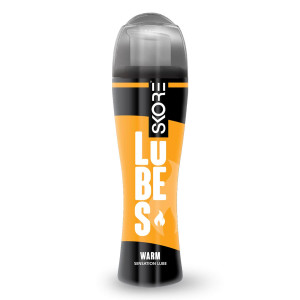
| 51 | The Widely Opened Position | Classical Opening | Beginner Friendly | Skore Warm Lube → |
| 52 | The Flower Press | Full Contact | All Couples | Okamoto 0.03 Platinum → |
| 53 | Fish in the River | Seated Astride | Intermediate | Skore Cool Lube → |
| 54 | The Shoulder Stand | Elevated | Advanced | KamaSutra LongLast Sync → |
| 55 | The Yawning Position | Legs Parted Wide | Intermediate | Skore Strawberry Lube → |
| 56 | Opening the Heavenly Gate | One Leg Raised | Intermediate | Skore Nothing Delay → |
| 57 | Piercing the Fruit | Elevated Surface | Intermediate | Skore OH!! Stimulant Lube → |
| 58 | Ascending the Mountain | Standing | Advanced | Moods Silver 1500 Dots → |
| 59 | Pillar in the Temple | Standing | Advanced | Skore OH!! Pleasure Gel → |
| 60 | Love's Arrow | Standing | Intermediate | Skore Cool Watermelon → |
| 61 | The Crab Position | Knees Drawn | All Couples | Skore HardRock Gel → |
| 62 | The Barrow | Knees to Chest | Intermediate | Skore Mega Combo → |
| 63 | The Locust | Flat Contact | All Couples | Skore Buzz Ring → |
| 64 | The Double Crab | Acrobatic | Expert Only | Durex Play Wild Wand → |
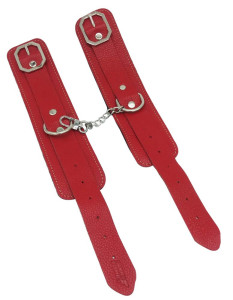
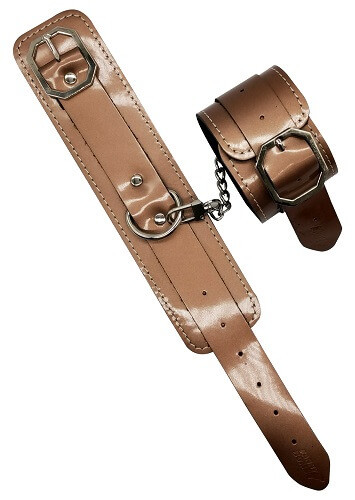
| 65 | The Lotus-Like Position | Legs Folded | Advanced | Surrender Handcuffs Red → |
| 66 | Five Triangles | Legs Folded | Intermediate | Okamoto 0.03 Platinum → |
| 67 | Wife of Indra | Legs on Chest | Advanced | Skore Warm Lube → |
| 68 | The Bodyguard | Knees to Chest | Intermediate | KamaSutra LongLast Sync → |
| 69 | The Half Pressed Position | One Leg Raised | Intermediate | Skore Cool Lube → |
| 70 | The Story Teller | Legs on Shoulder | Intermediate | Skore Nothing Delay → |
Shop by Category




Reading Vatsyayana Today
Strip away the mystique that eighteen centuries and one Victorian translator built around this text, and what remains is a strikingly practical document: pay attention to your partner, treat her responses as instructions, and understand that pleasure is worth studying rather than stumbling through. The positions are the part everyone quotes; the attentiveness is the part worth keeping. Part 2 continues the catalogue.
Frequently Asked Questions
What is the Kamasutra actually about?
Only about a fifth of Vatsyayana's text concerns sexual positions. The rest covers courtship, marriage, household management, friendship and social conduct — it is a treatise on living well, written in Sanskrit somewhere between the 2nd and 4th century CE. Its lasting significance is treating pleasure as a legitimate goal of life alongside duty and prosperity.
Are these positions numbered in the original text?
No. Vatsyayana groups positions by category — supine (uttana-bandha), seated, standing and so on — with descriptive names rather than numbers. The 51–70 numbering here belongs to our 365-position series, which sequences several classical traditions together.
Which of these are the classical named postures?
The Widely Opened, The Yawning Position and The Half Pressed Position are among the postures Vatsyayana names directly. Others in this section — The Crab, The Locust, Five Triangles — come from the wider commentarial tradition that grew around the text over centuries.
Which should beginners try first?
The Locust (63) and The Flower Press (52) require no flexibility, strength or setup. The Lotus-Like Position (65), Double Crab (64) and Shoulder Stand (54) sit at the other extreme — worth building up to gradually, and entirely fine to skip.
Why does the text pay so much attention to her signals?
It is one of the Kamasutra's genuine distinctions. Vatsyayana repeatedly frames the woman's movements — raised hips, a wrapped leg, a foot placed on the shoulder — as communication that should direct the encounter. Modern sexology arrives at the same conclusion about responsiveness, roughly eighteen centuries later.
Is delivery from Condombazaar discreet?
Completely. Every order ships in plain, unmarked packaging with sender name CA Gain Healthcare — no product name or brand visible anywhere on the box. Delivering privately across India since 2010.
Related Guides
Was this guide useful? Share it: